




Ing. Renáta Šejnová
Marketing Manager

24. 11. 2026 7 minutes čtení
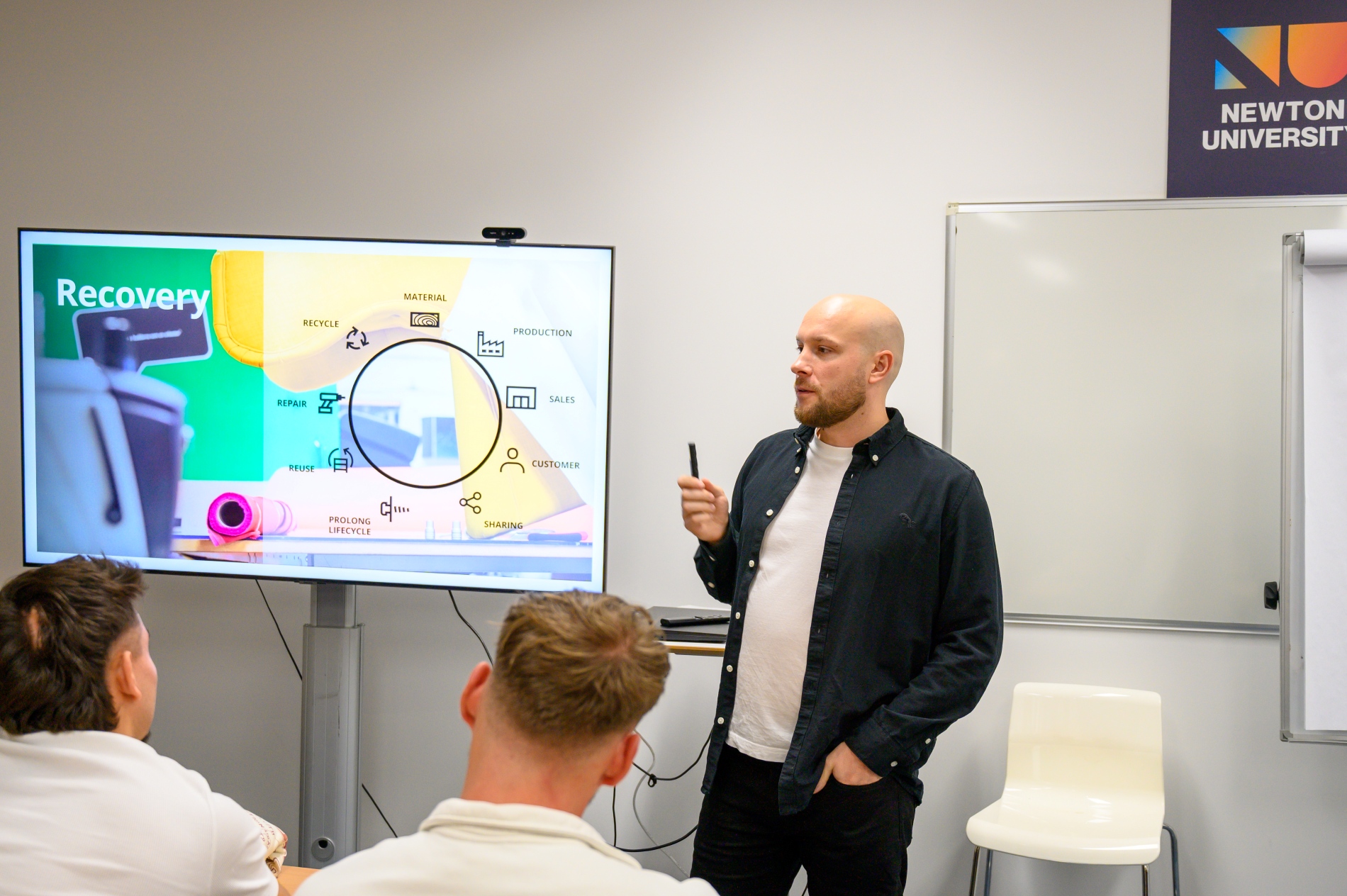
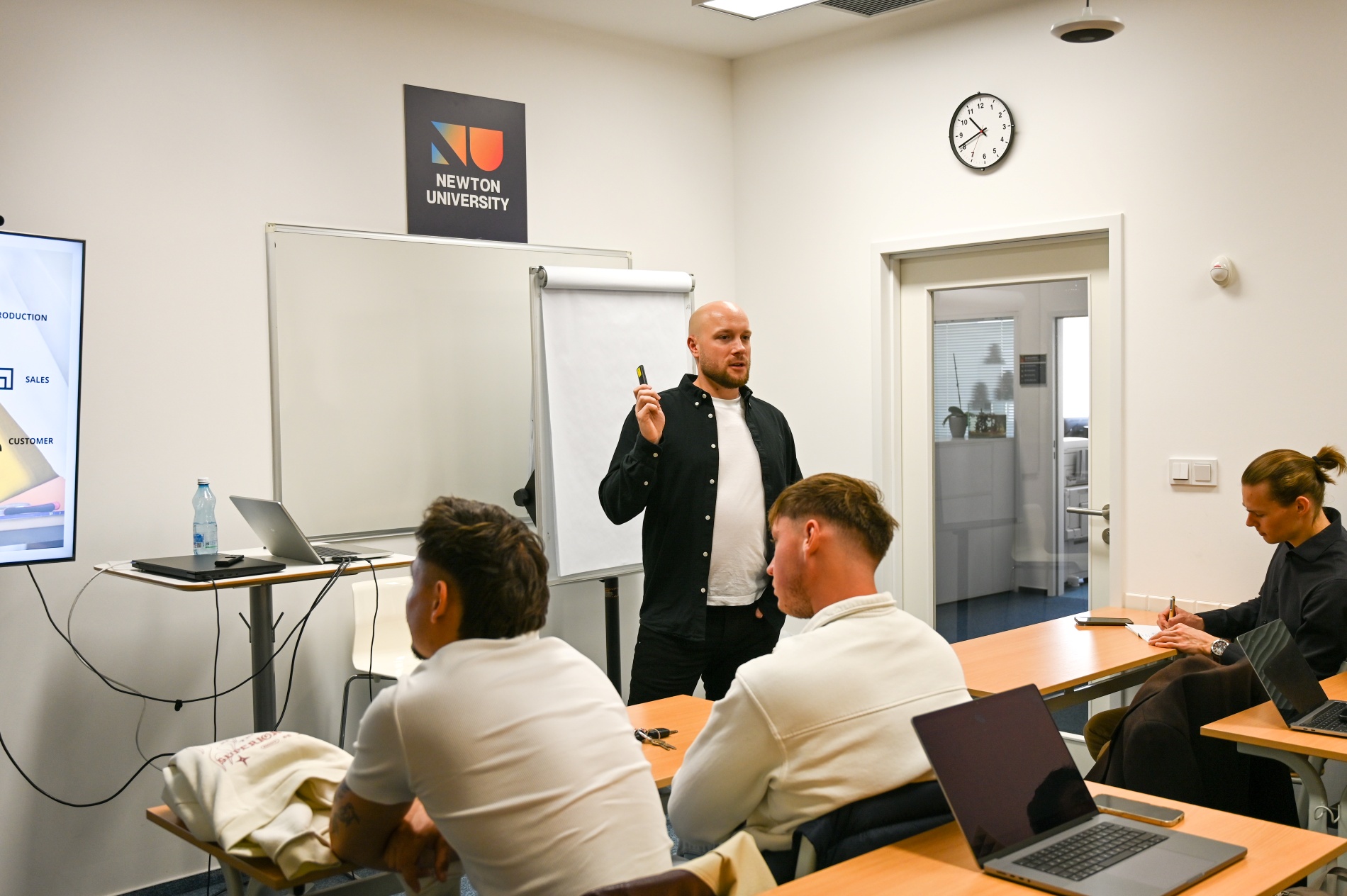
An electric delivery van needs somewhere to charge. A piece of furniture bought back from a customer needs storage space and a new owner. Both have to make financial sense. These were the kinds of decisions Marcin Tokarz, IKEA’s Country Sustainability Manager for the Czech Republic, Hungary and Slovakia, explored with our students. In our follow-up interview, he explains what it takes to turn corporate ambitions into everyday practice.
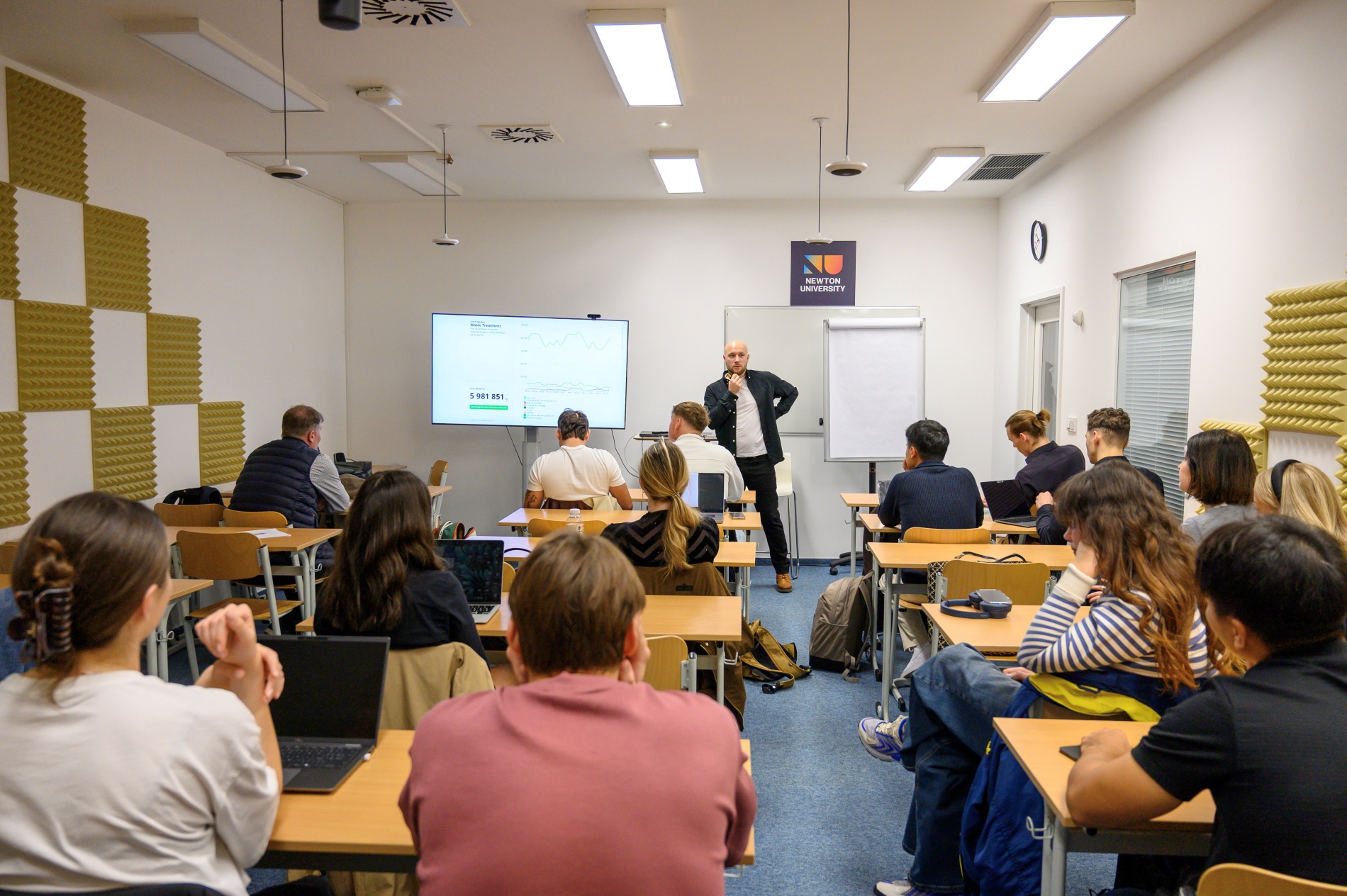
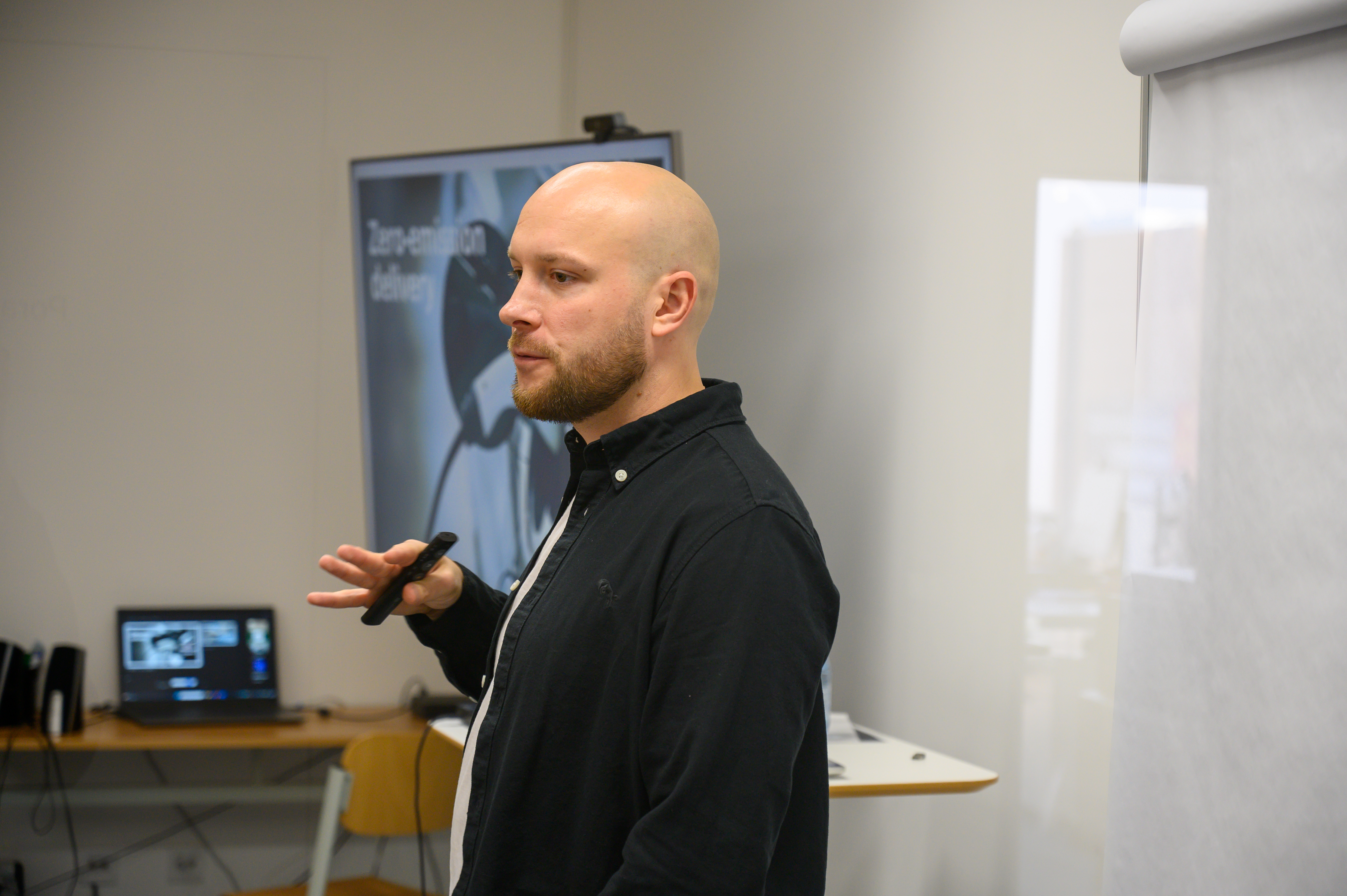
Invited by our lecturer Graeme Murray, Marcin Tokarz joined a teaching session at NEWTON University to share his experience of working for a global brand seeking to create more value with fewer resources. His talk covered product innovation, renewable energy and circularity: keeping products and materials in use for longer.
Reflecting on the session, Graeme Murray highlighted a tension within the business model. IKEA’s success remains closely tied to the volume of new products sold and to reaching more customers. But should the company sell those customers more things, or help them live better with what they already have? For Graeme, addressing that balancing act is an important part of the sustainability discussion.
After the session, we caught up with Marcin to ask about specific projects, customer behaviour and the skills future managers can start developing while they are still studying.

My journey into sustainability evolved naturally through different roles at IKEA. Sustainability has always been a key part of the business, but working on projects focused on closing the loop for our products gave me a much deeper understanding of circularity and resource efficiency.
Later, while supporting regional sustainability business plans, I saw how sustainability can create long-term value for customers, co-workers, and the business. Rather than one defining moment, it was a gradual realisation that this was the area where I could have the greatest impact.
A good example is our Zero Emission Delivery project. The environmental benefits required substantial upfront investment. We had to work closely with transport partners, assess the availability of charging infrastructure, and in some cases adapt parts of our fulfilment network to support the transition.
At the same time, we needed to ensure that delivery services remained reliable and affordable for customers. Our approach was to look beyond short-term costs and focus on the long-term value. We planned the transition in phases and balanced sustainability ambitions with operational realities, maintaining a positive customer experience while steadily increasing the share of deliveries made with zero-emission vehicles.
The outcome showed that, with the right planning and partnerships, it is possible to reduce environmental impact while continuing to meet customer expectations and business objectives.
Our markets have made strong progress. The Czech Republic became the first Ingka market to reach 100% zero-emission last-mile deliveries, while Slovakia has reached 86% and Hungary 59%.
The biggest challenge now is expanding these solutions beyond urban areas, where infrastructure and delivery conditions are often more complex. Achieving further progress will require continued collaboration and innovation across the entire delivery ecosystem.
These services are an important part of the transition towards a more circular business model because they help products stay in use for longer and reduce the need for new resources. However, making them work at scale requires more than simply offering them to customers.
One of the biggest challenges is adapting operational processes to handle products moving in both directions. Traditional retail is designed around getting products efficiently from suppliers to customers. Circular services require additional capabilities such as collecting, assessing, refurbishing, storing, and reselling products in a way that remains convenient for customers and efficient for the business.
At the same time, these services need to be financially sustainable. To create a real impact, circular solutions must become a natural part of the business rather than depend on continuous additional investment. Finding the right operating model, balancing costs, and maintaining affordable prices are critical. Our ambition is to make these services a normal part of how people furnish their homes.
For me, transparency is the foundation of credibility. Customers should look for companies that openly communicate both their achievements and the areas where they still need to improve.
At IKEA, we do this through sustainability reporting and product information that helps customers make informed choices. Being honest about challenges is just as important as highlighting progress.
One example I highlighted was the challenge of translating ambitious goals into everyday business decisions. A key lesson is that sustainability is ultimately about integration and collaboration. Success comes when different parts of the business align around a common purpose and make sustainability part of their decision-making process.
I also emphasised the importance of long-term thinking. One of the greatest challenges for any business is balancing immediate financial pressures with long-term environmental and social commitments. Future managers will need the courage and discipline to look beyond short-term profit goals and make decisions that create sustainable value over time.
One of the questions that stayed with me was about customer behaviour and how companies can encourage people to choose more sustainable products and solutions. It is a topic that many businesses are trying to address, and there is rarely a single answer.
My response was that sustainability often becomes much more attractive when it is connected to tangible benefits for customers, especially saving money and resources. Many people are motivated by solutions that are practical, convenient, and economically beneficial. When sustainable choices help customers reduce energy consumption, extend the life of products, or avoid unnecessary costs, adoption becomes much easier.
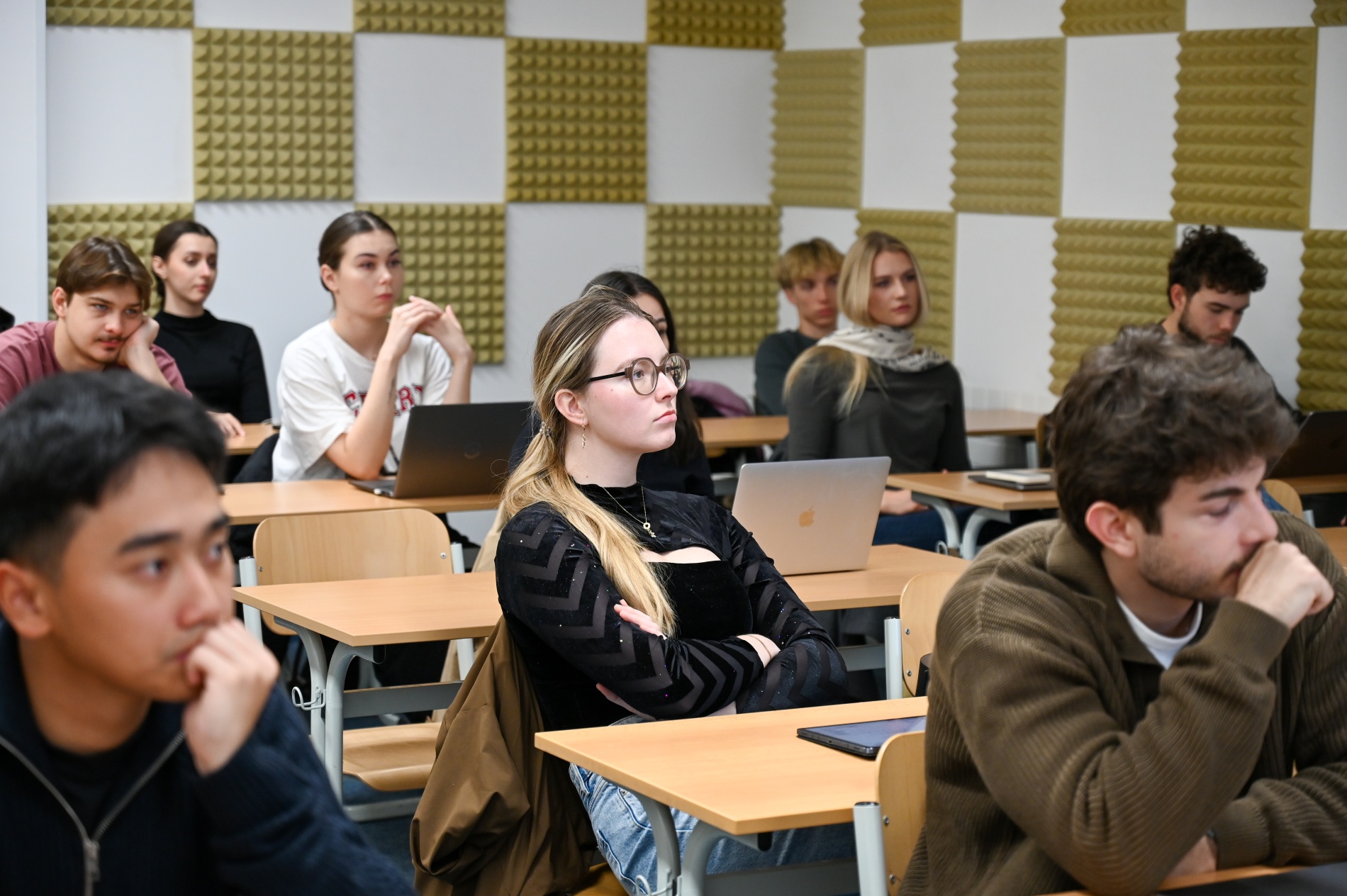
Direct conversations with business practitioners help bridge the gap between theory and reality. Students can learn frameworks and concepts in the classroom, but hearing real examples from companies shows how sustainability is implemented in practice, what challenges arise, and what impact different decisions can have.
If I were to highlight one skill, it would be critical thinking. Sustainability challenges are rarely straightforward. Future leaders will need to evaluate complex situations, question assumptions, assess different perspectives, and make informed decisions based on both business and sustainability considerations.
Gallery
Podobné články


© 2025 NEWTON University Group, s.r.o. Vysoká škola NEWTON, a.s.(v internacionálním prostředí NEWTON University), NEWTON Business School, a.s., Vysoká škola Sting, o.p.s.
If you have any questions, please ask us.

Marketing Manager
Notice