




Ing. Renáta Šejnová
Marketing Manager

25. 11. 2026 5 minutes čtení
AI can speed up reporting and routine tasks. Earning a team’s trust or handing over a business still takes human judgement. At NEWTON’s Manager of the Year Conference, leaders shared lessons on AI, family firms and leading change that you can use while still studying.
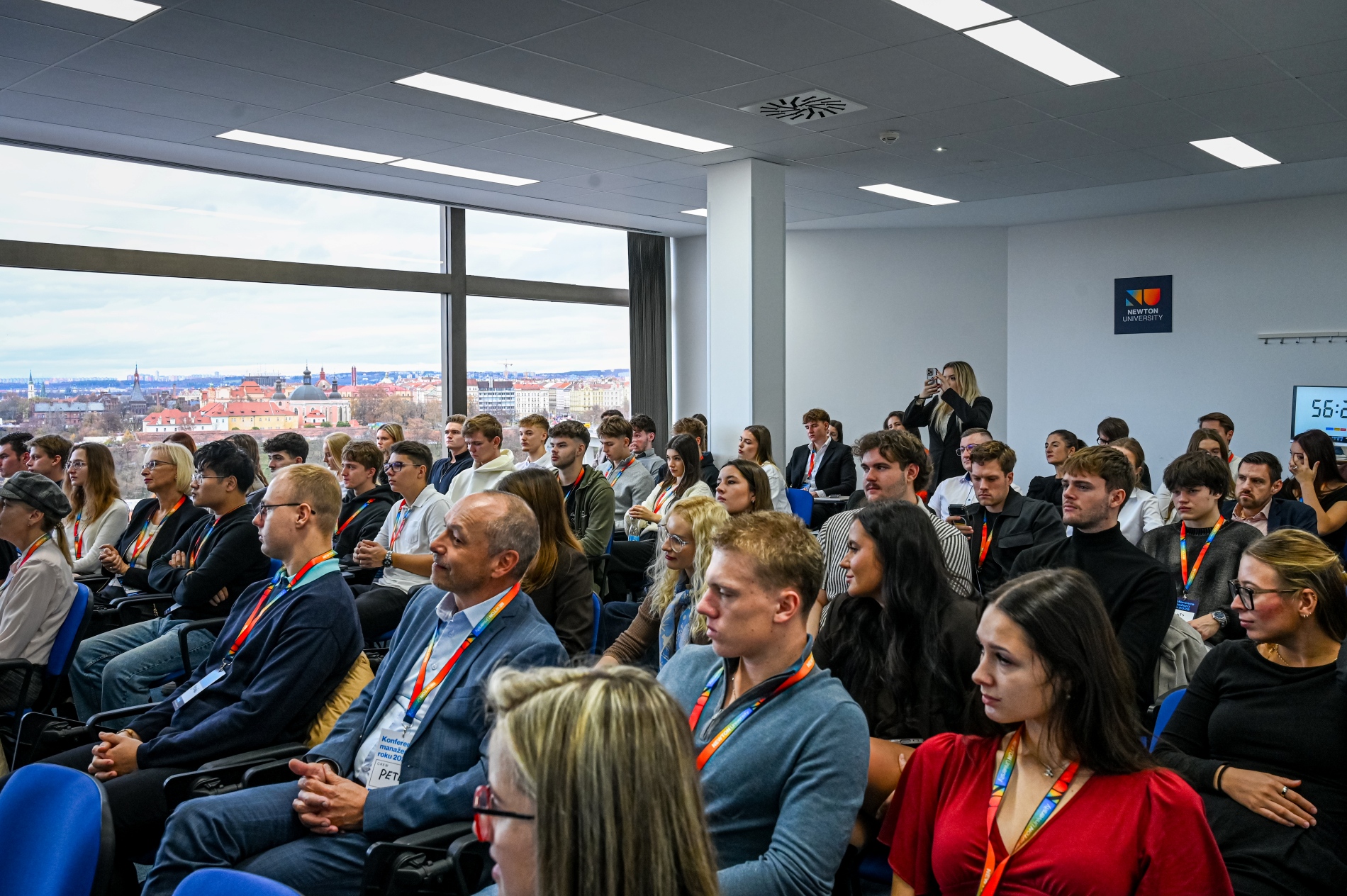
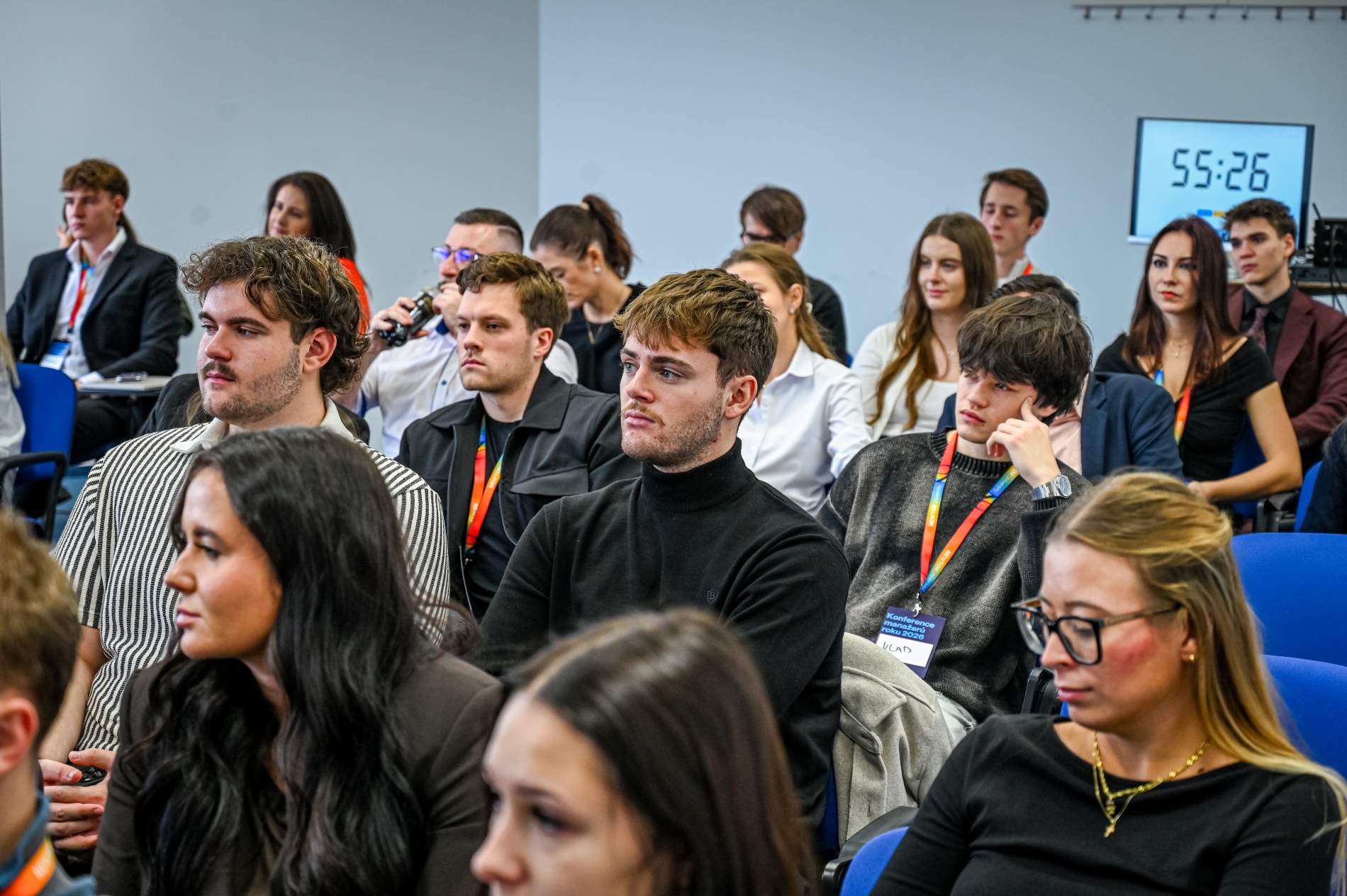
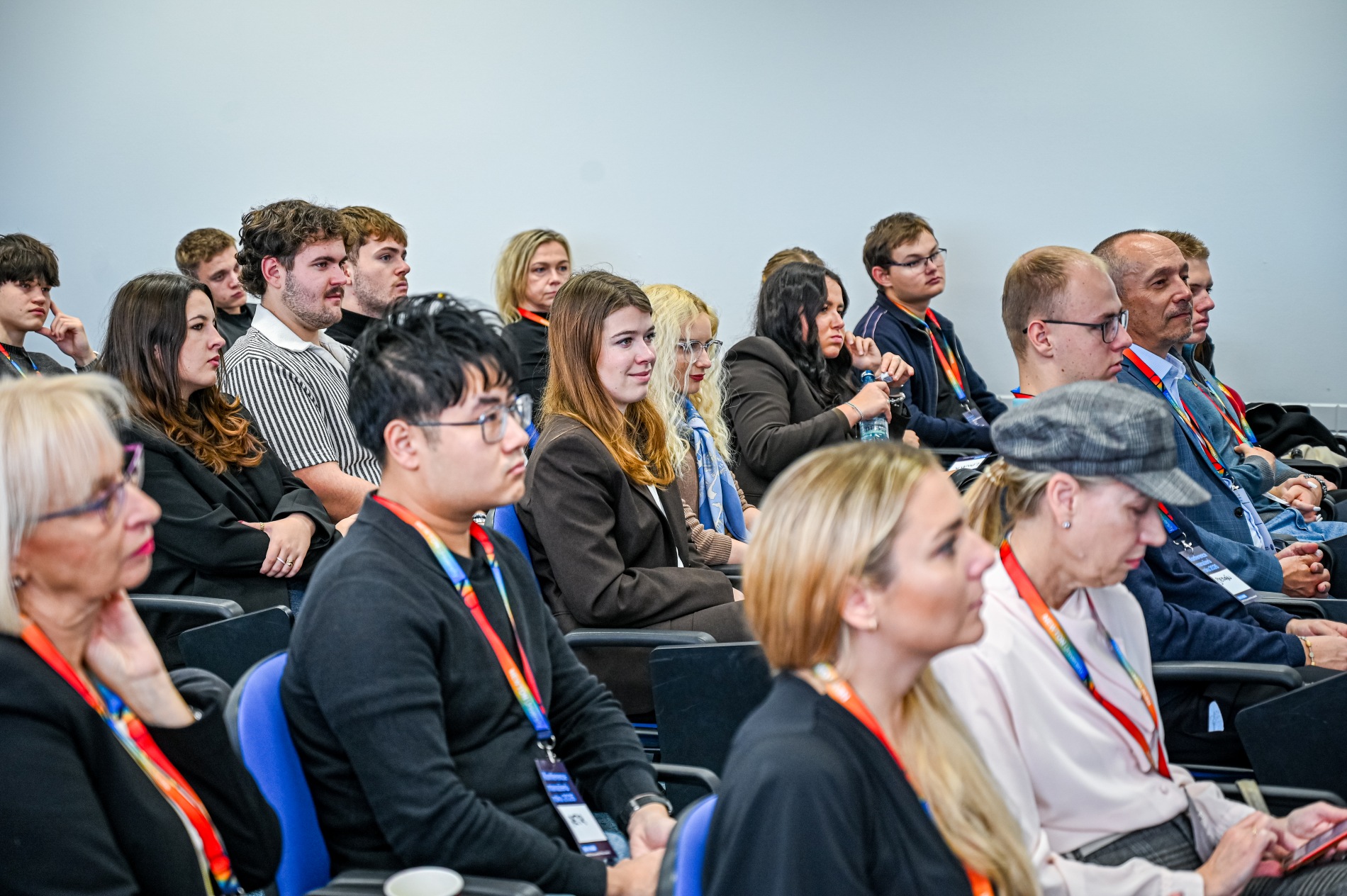
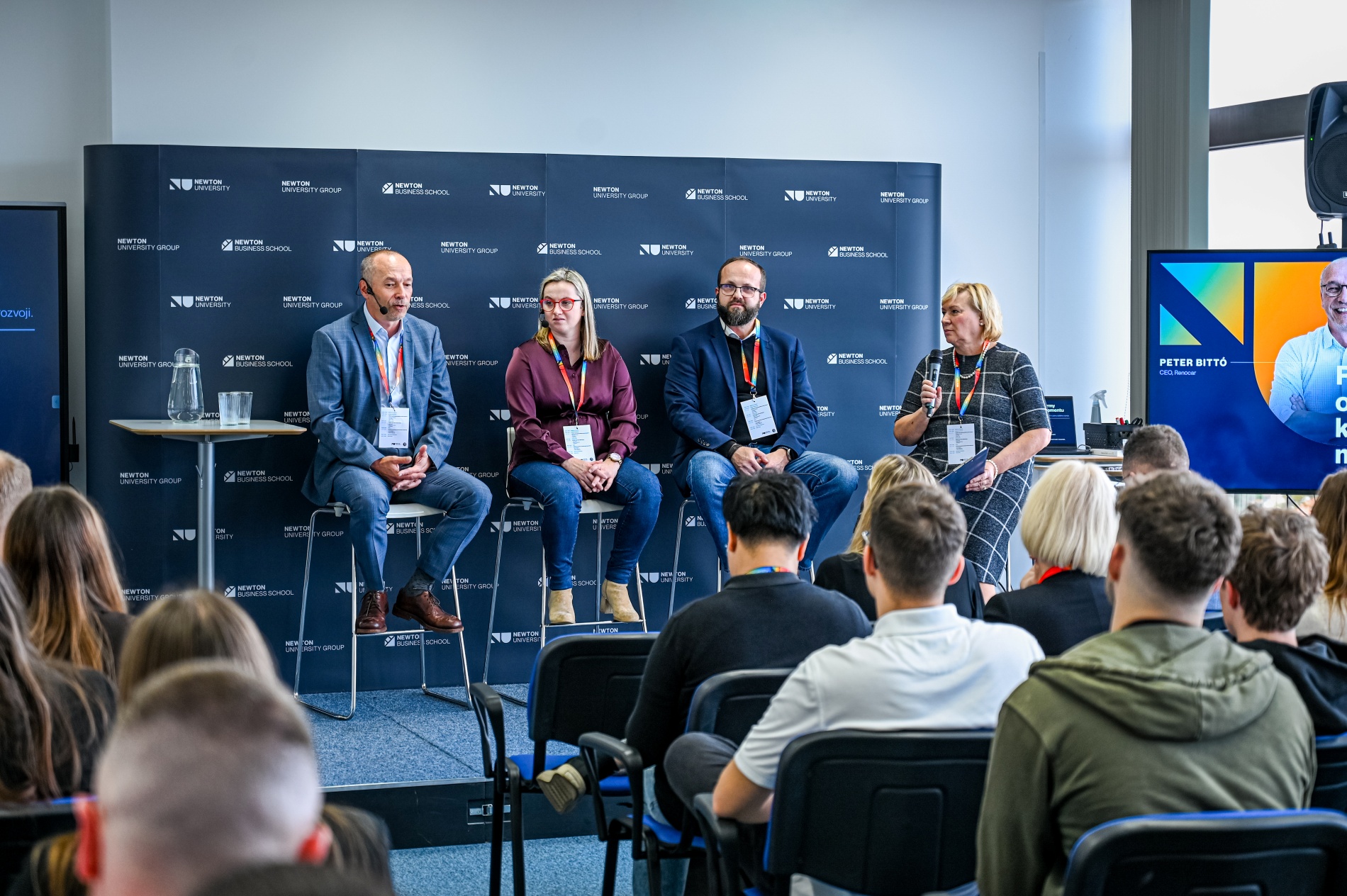
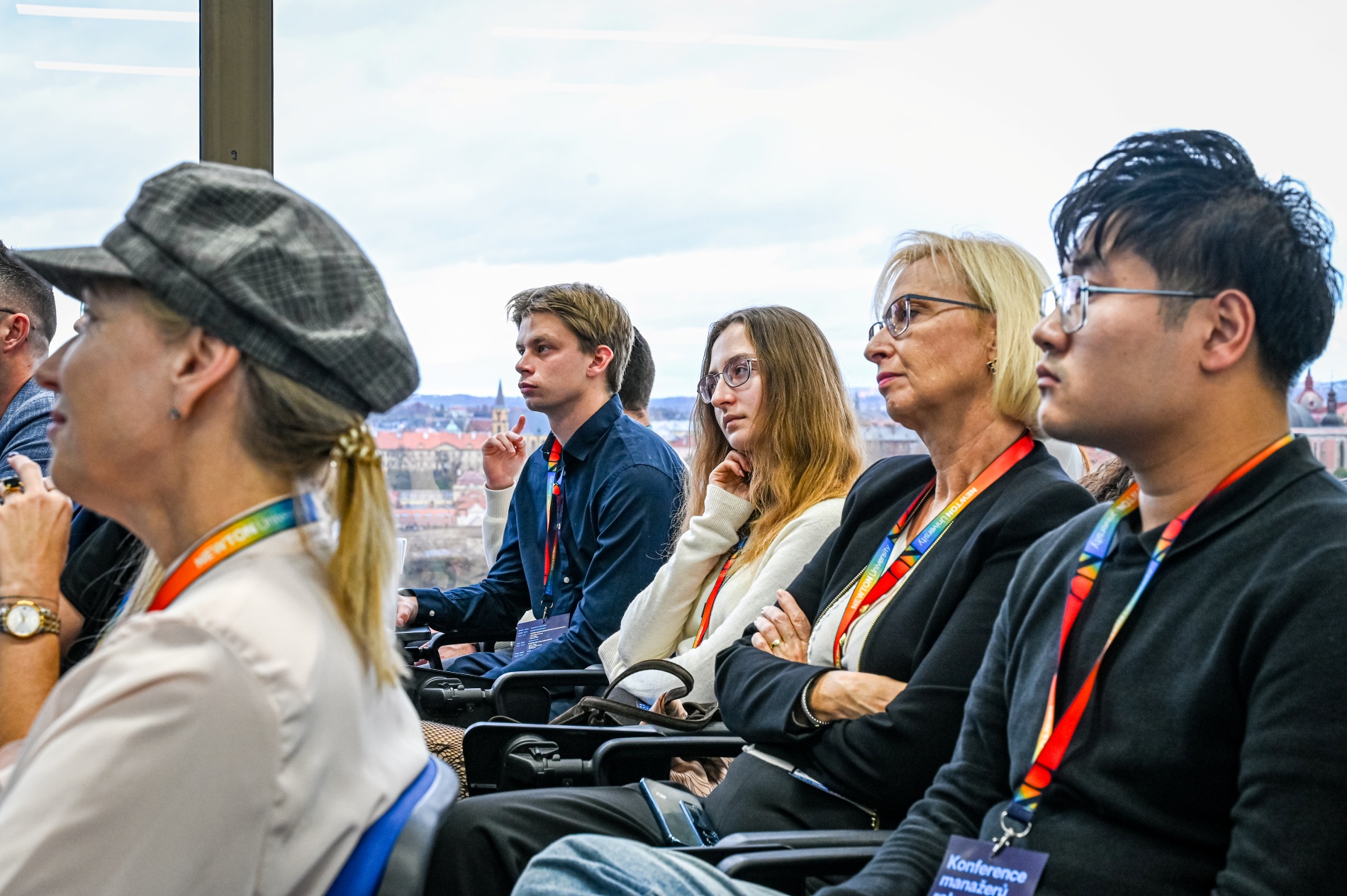
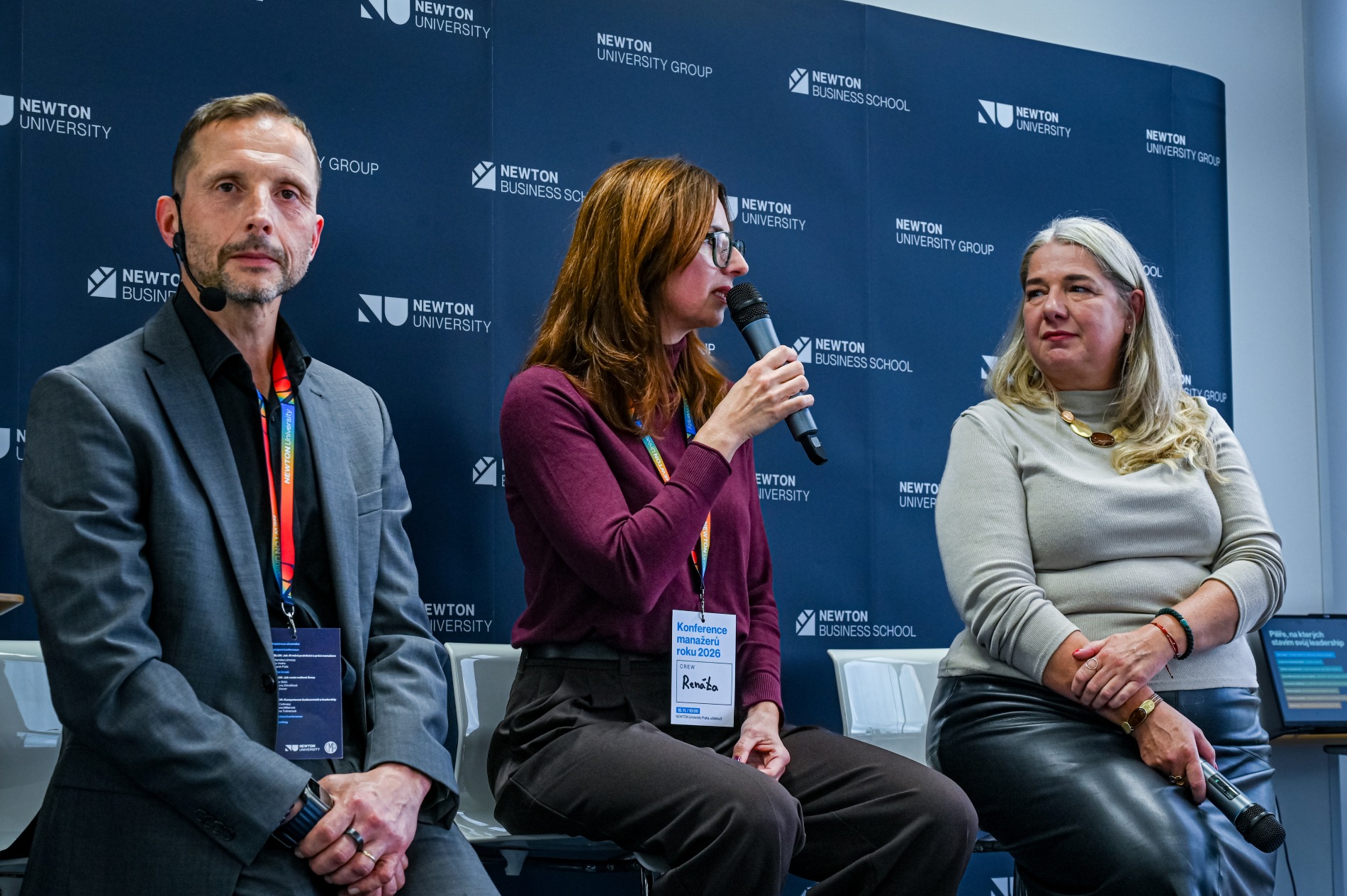
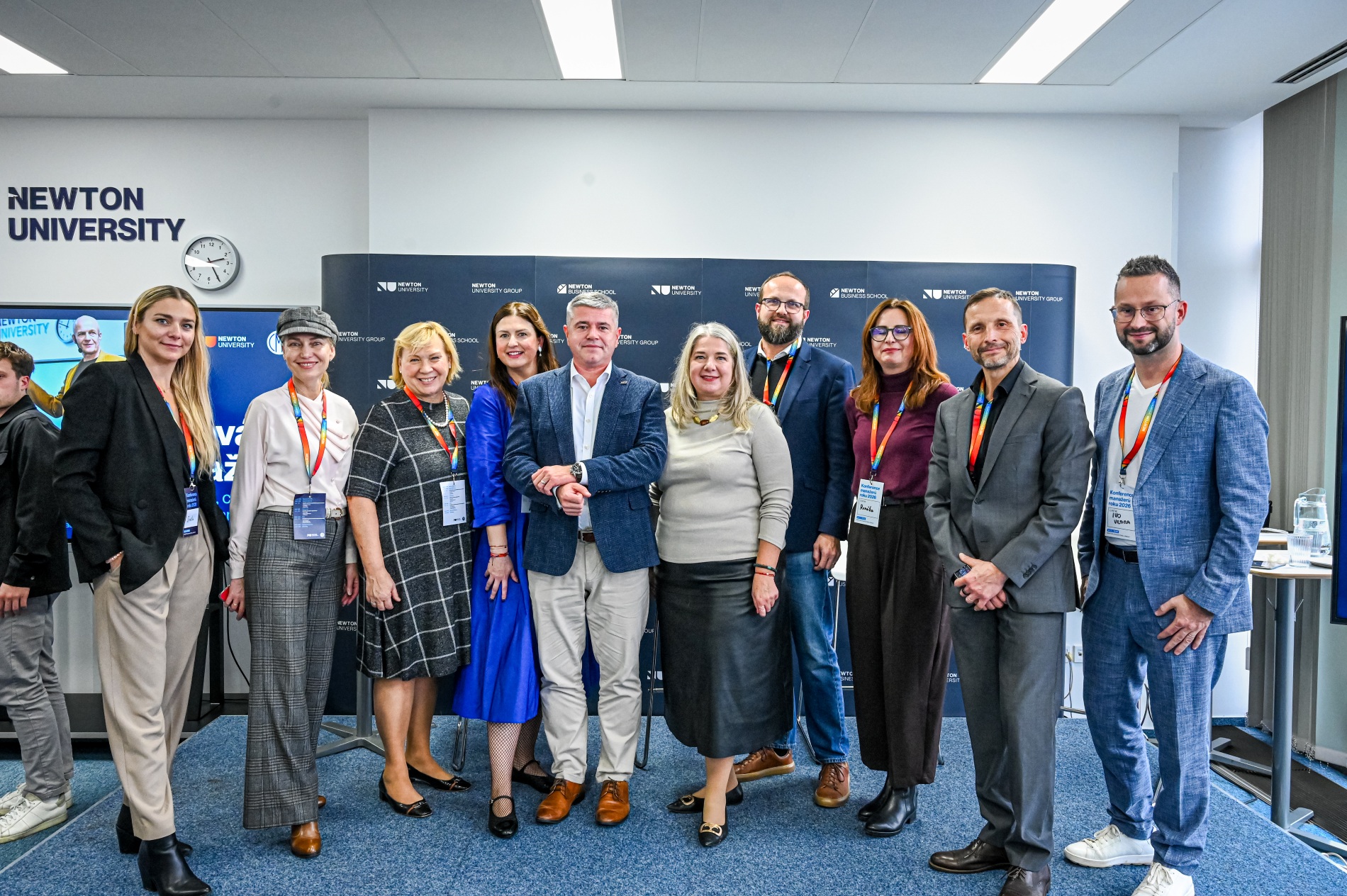
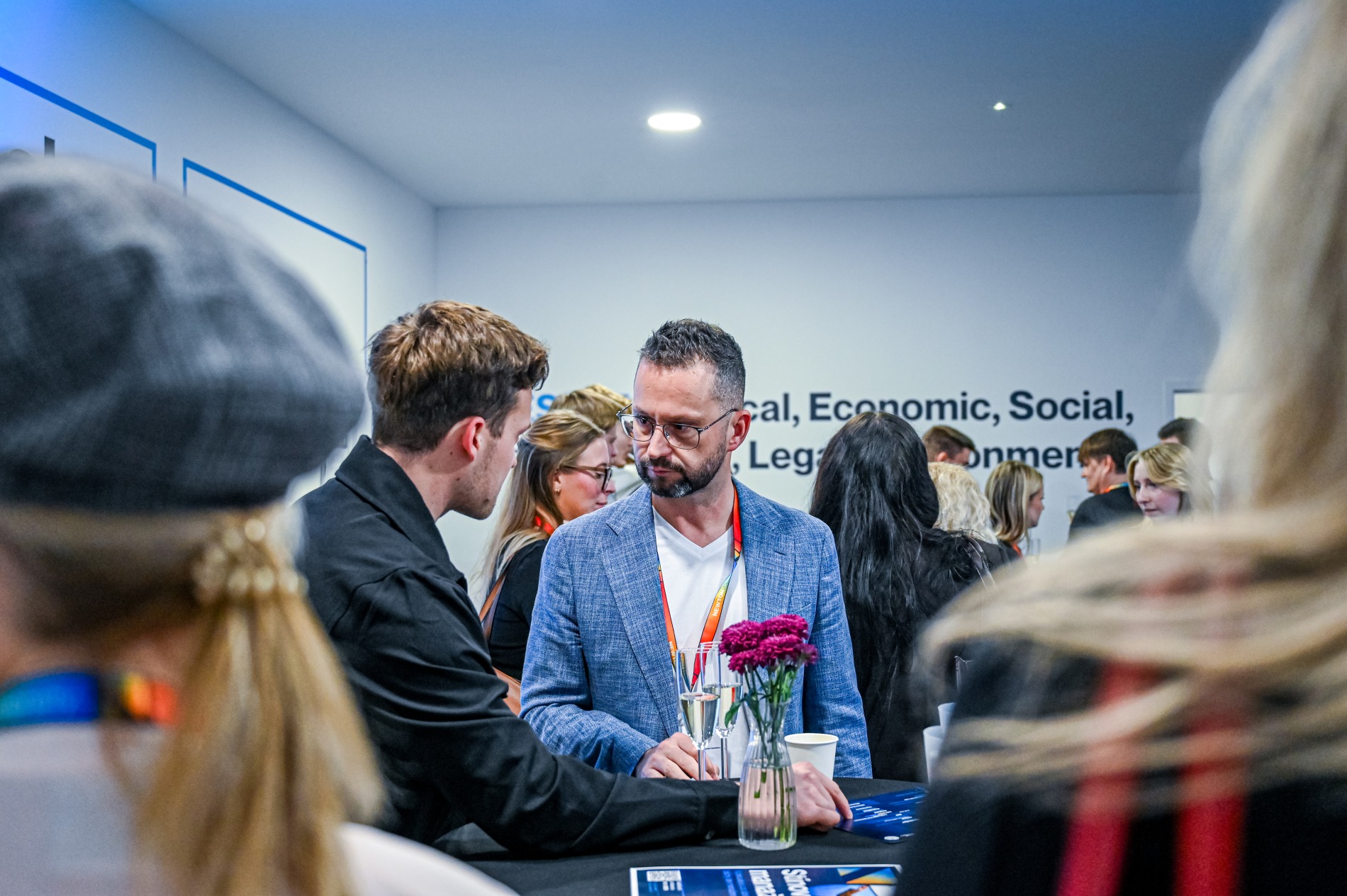
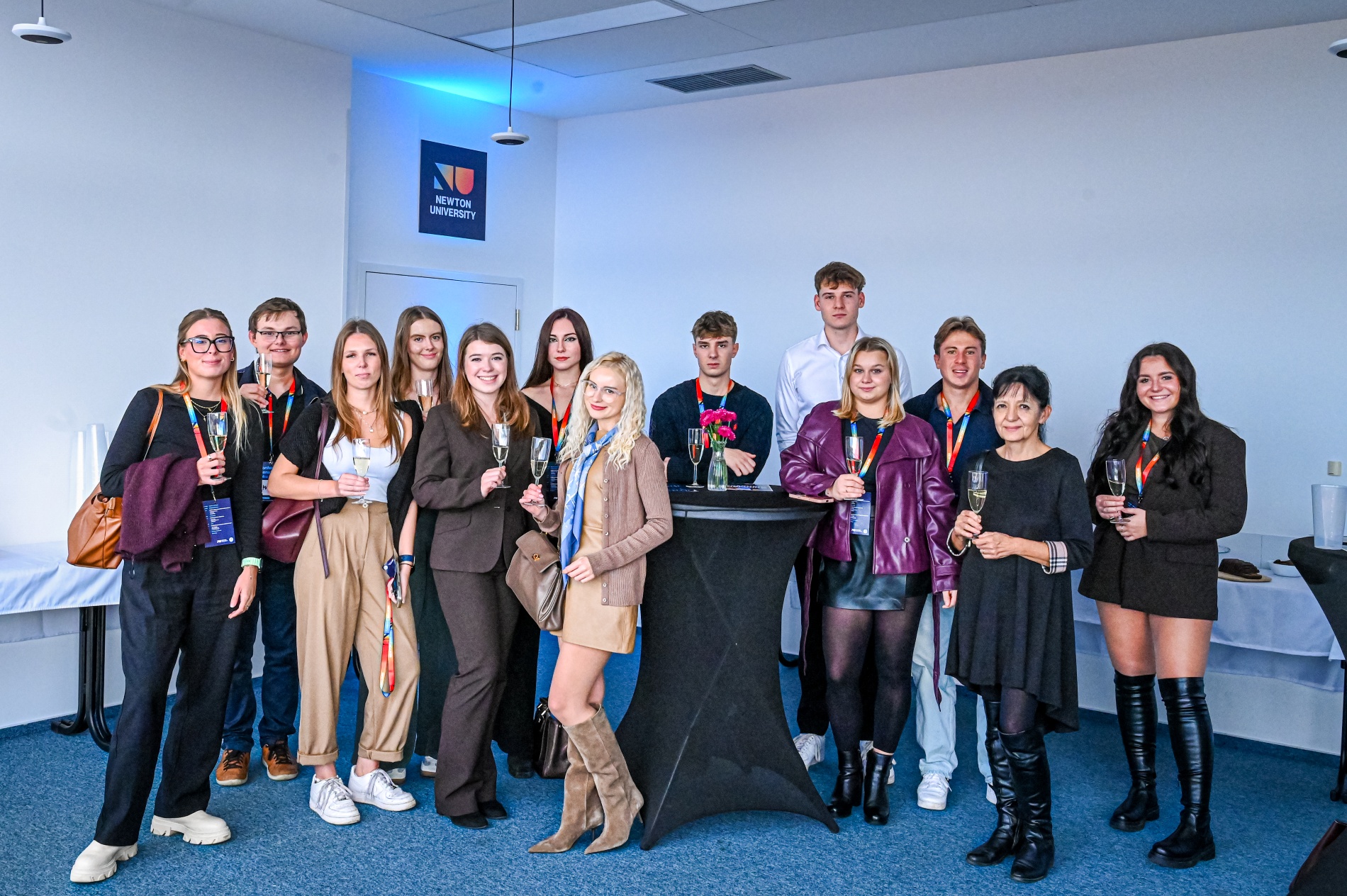
On 18 November 2026, we hosted the conference with the Czech Management Association at our Prague campus. Finalists of the 2025 Manager of the Year awards met students to discuss AI in business, family firms and the skills future leaders will need.
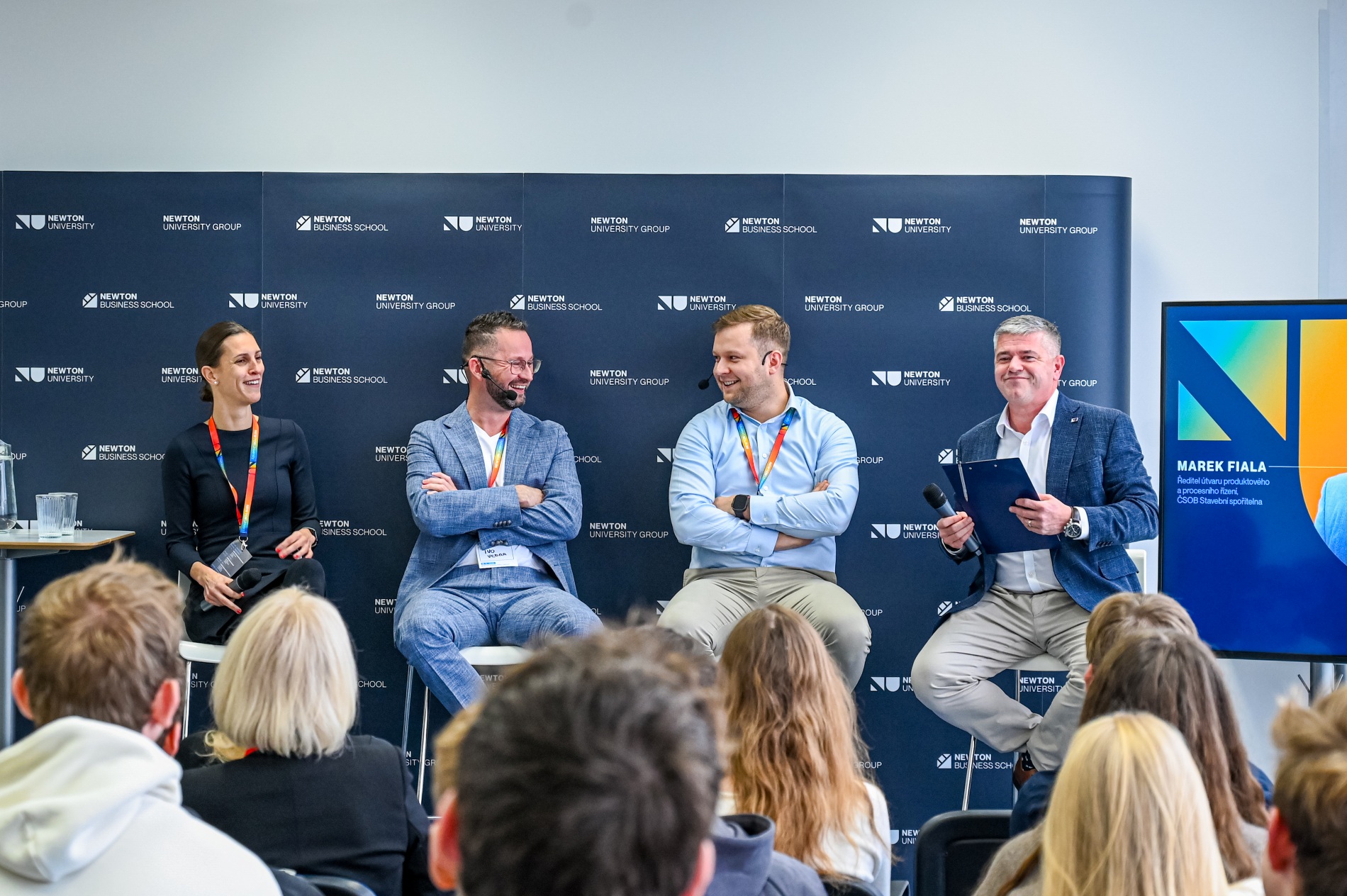
Jiří Koleňák, Olga Girstlová and Lucie Landová moderated the discussions. Speakers described bringing technology into everyday work, handing responsibility to professional managers and earning a team’s respect, giving students a closer look at what managing a business involves.

Markéta Lörinczy of Phonexia discussed using AI to work faster and more efficiently, particularly on routine tasks, administration and reporting. Ivo Vedra of ZELENKA described AI as an assistant a manager can keep close at hand. Making that relationship useful, however, takes experience, a clear sense of what you want to achieve and a willingness to check the results.
Marek Fiala of ČSOB Stavební spořitelna raised cloud computing and data security. Alongside potential savings came a point easily overlooked in the excitement around new tools: the information we share with them, and the conditions under which we use them, matter too.
The discussion turned to empathy, critical thinking and the human side of management. Having more information and getting it faster still leaves a manager with the task of assessing its quality, explaining a decision and understanding its effect on colleagues. If you already use AI in your studies, it is a useful test: can you explain and defend the result?
Peter Bittó of Renocar reflected on starting out in business more than thirty years ago. Founders had the courage and appetite to build something, learning much of what they needed along the way. As a company grows, though, the approach that helped it succeed can begin to hold back its next stage of development.
He identified three conditions for a successful transition to professional management: an unambiguous decision by the family, a strong mandate for the manager and respect for the agreed roles. Trust needs to come with authority. It is difficult to hold someone responsible for results while denying them the room to make decisions.
Simona Zdražilová of NERA DISPLAYS discussed professionalising operations while retaining family values. She also spoke about earning respect in her own role, demonstrating her abilities so colleagues would see her contribution rather than simply the owner’s daughter. Reflecting on her MBA studies at NEWTON, she noted how often people from different industries face similar management dilemmas.
Jiří Rösner of Jungheinrich Chomutov discussed running an industrial business within an international group. He spoke about taking a long view, motivating people and negotiating support for change, including finding agreement with colleagues who have different priorities.
Jan Cidlinský of WILO CS returned to the question of bringing a team on board. He described change as a continuing part of a manager’s job, requiring support from both colleagues and senior leaders. Before seeking that support, managers need to be clear about why they want the change and why they believe it is worthwhile.
That brought authenticity into the discussion. If you do not believe in what you are asking people to do, explaining why they should leave a familiar process behind becomes much harder. You may face the same question when leading a student project: can you explain the thinking behind your proposal and make room for others’ concerns?
Renata Millerová of Thermo Fisher Scientific connected AI with independent judgement, checking results and taking initiative. She emphasised keeping the customer experience in view when introducing new technology. Resilience, creativity and curiosity also help people see the wider context.
Yvona Tošnerová explored working across generations. Collaboration with younger colleagues, she explained, brings an exchange of experience and greater use of technology. Continuing to develop, and being able to see the impact of your work, both matter.
Looking ahead, the conversation returned to openness to learning, critical thinking and adaptability. Adapting also means letting go of an approach that no longer works. There is a practical question here for your own development: what are you still doing simply because it is how you were once taught?
Gallery
Speakers encouraged students to work while studying and be willing to try, decide and make mistakes. Jan Cidlinský recommended learning new things and being prepared to start again. Yvona Tošnerová highlighted mentoring and professional communities.
There was room, too, for rest, looking after yourself and support from the people around you. Renata Millerová reminded students that different things happen at different times. Developing your career does not have to mean accepting every opportunity for fear of missing out.
You do not need to know today where your career will lead. You can already take responsibility in a shared project, ask someone experienced about their decisions or try a field that interests you. Events at NEWTON aim to open up those next steps.
Podobné články


© 2025 NEWTON University Group, s.r.o. Vysoká škola NEWTON, a.s.(v internacionálním prostředí NEWTON University), NEWTON Business School, a.s., Vysoká škola Sting, o.p.s.
If you have any questions, please ask us.

Marketing Manager
Notice